Lesson Plans And Handouts
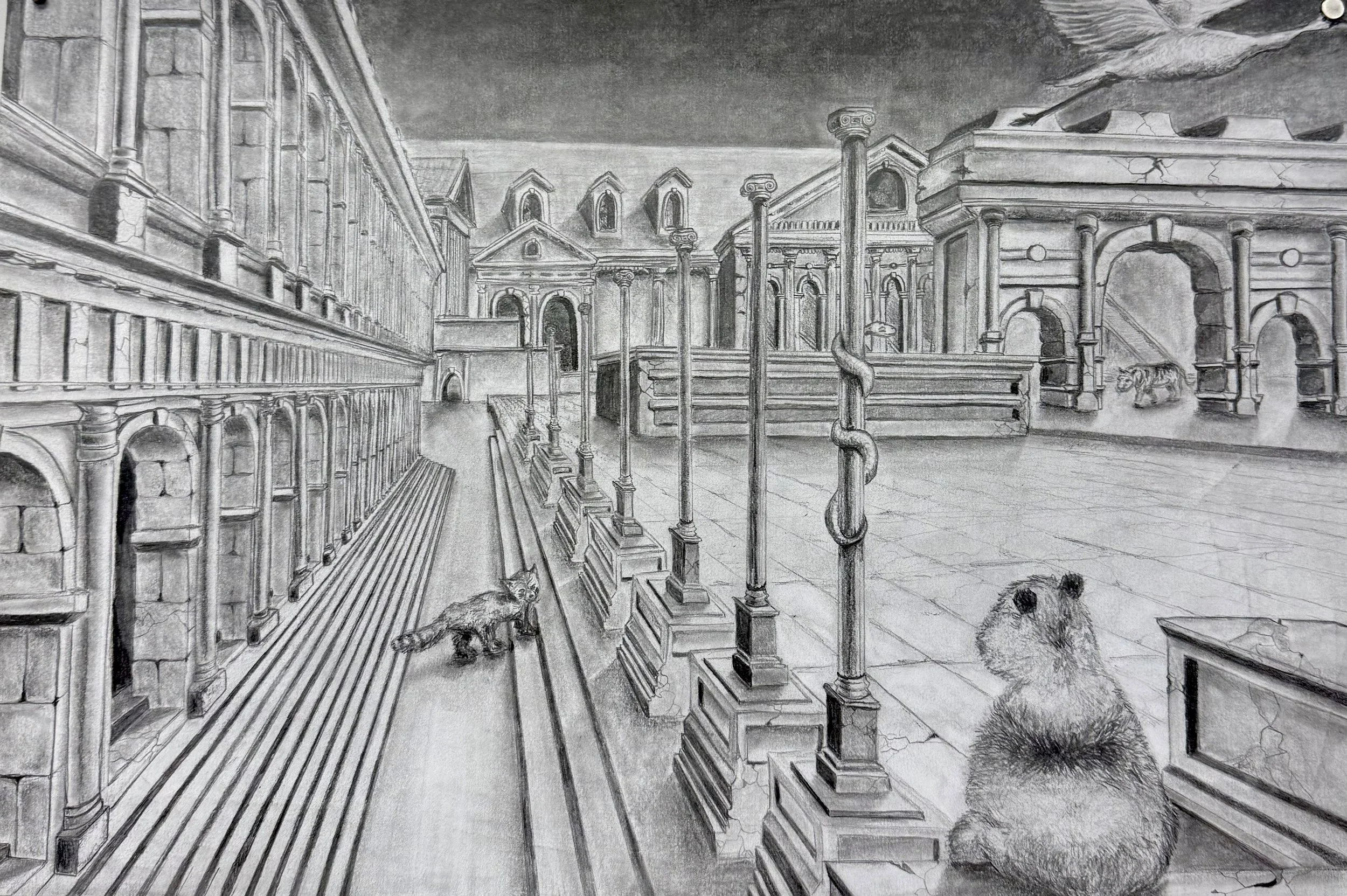
Creatures in a Deep Environment
Lesson Summary: In this lesson, students develop a graphite drawing of a detailed, realistic landscape incorporating animal figures inspired by a piece of media (film, book, game, etc.). They will use atmospheric and linear perspective to create depth and narrative layers.
Lesson Objectives:
Artistic Process - Students will demonstrate planning, compositional development, and the use of thumbnail sketches.
Technical Skill Development - Students will use graphite to create texture, contrast, and depth through perspective and shading.
Conceptual Understanding & Reflection - Students will express a narrative through their drawing and reflect on its meaning in critique.
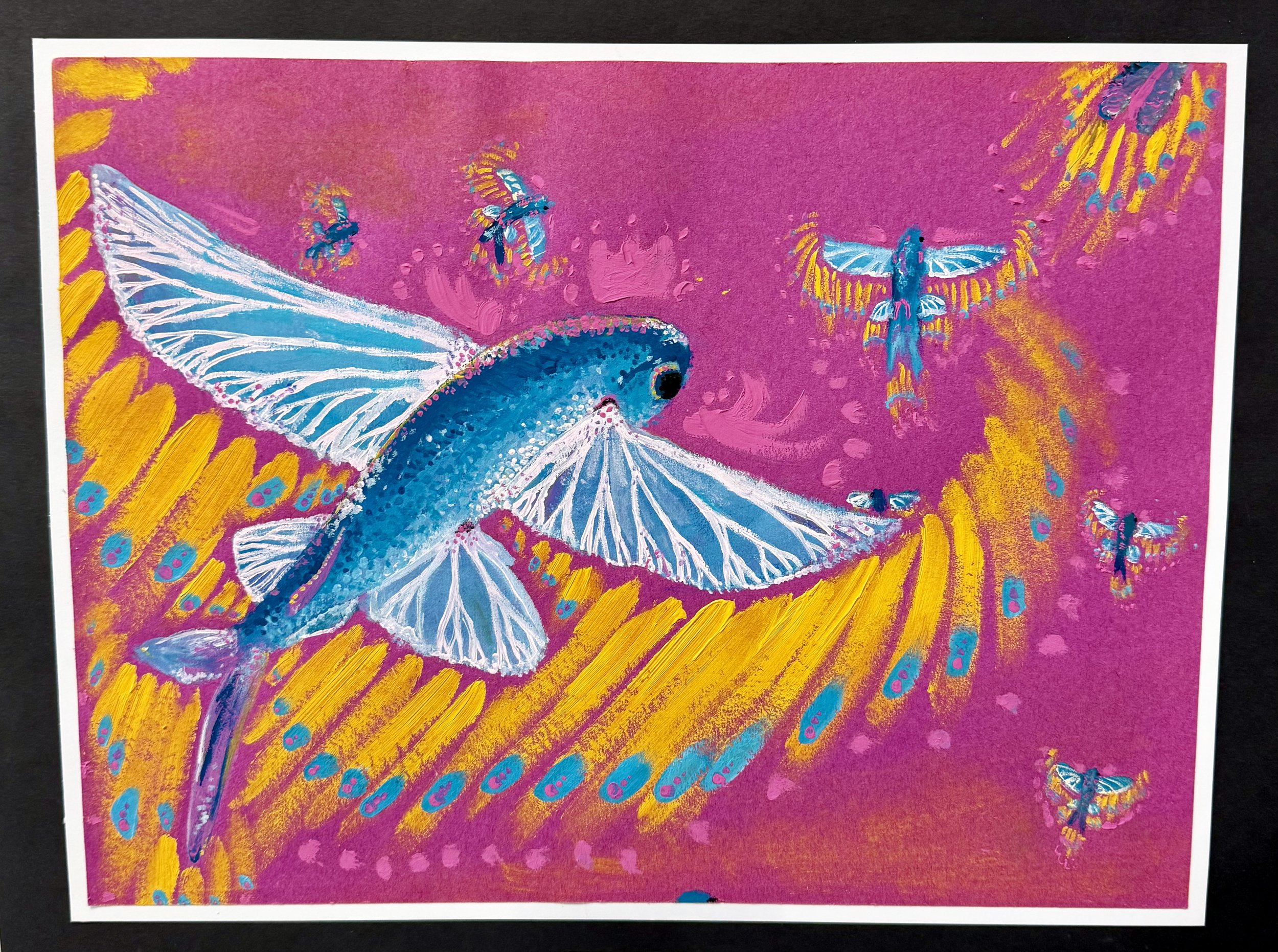
Fish Painting
Lesson Summary: In this lesson, students explore the natural world through painting, focusing on the form, texture, and color of fish. Using a high-quality reference photo, students will create a fish painting with a triadic color scheme, incorporating brush techniques to depict shine and scale texture effectively. Students will be encouraged to interpret their subject matter creatively while maintaining technical focus on color theory and texture.
Lesson Objectives:
Students will create a painting of a fish from a high-quality photo using a triadic color scheme.
Students will experiment with brush techniques to communicate the texture and shine of fish scales.
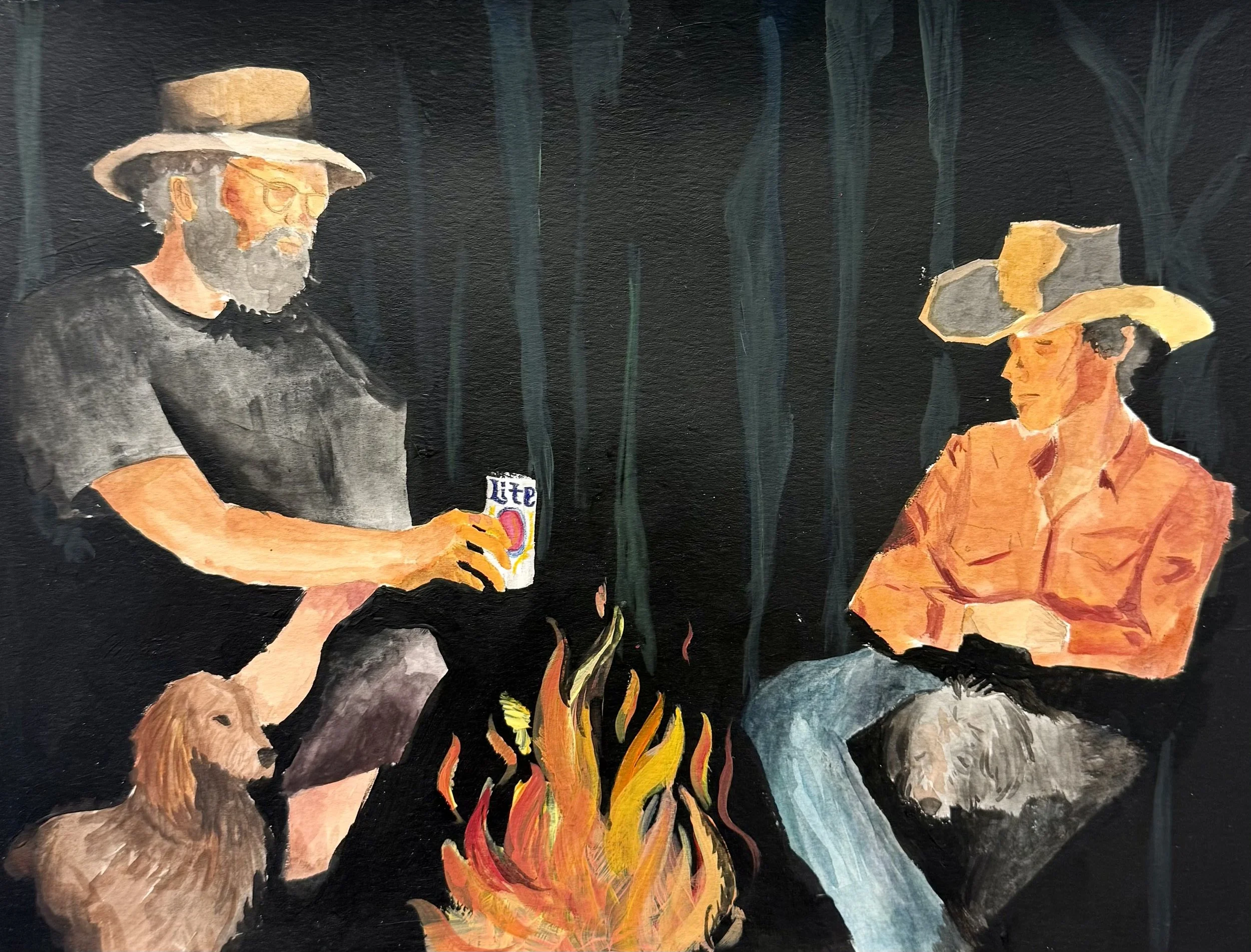
Narrative Environments
Lesson Summary: In this lesson, students design and paint a narrative environment inspired by a piece of media they personally enjoy—such as a movie, book, video game, or TV show. The focus will be on storytelling through landscape and setting, using visual elements to evoke mood, atmosphere, and connection to the chosen source and real life.
Lesson Objectives:
Students will design and develop a narrative environment that communicates story, mood, and atmosphere by using multiple visual references, compositional sketches, and iterative revisions.
Students will apply color theory, lighting, and spatial composition techniques to create depth, cohesion, and emotional impact in their final painting.
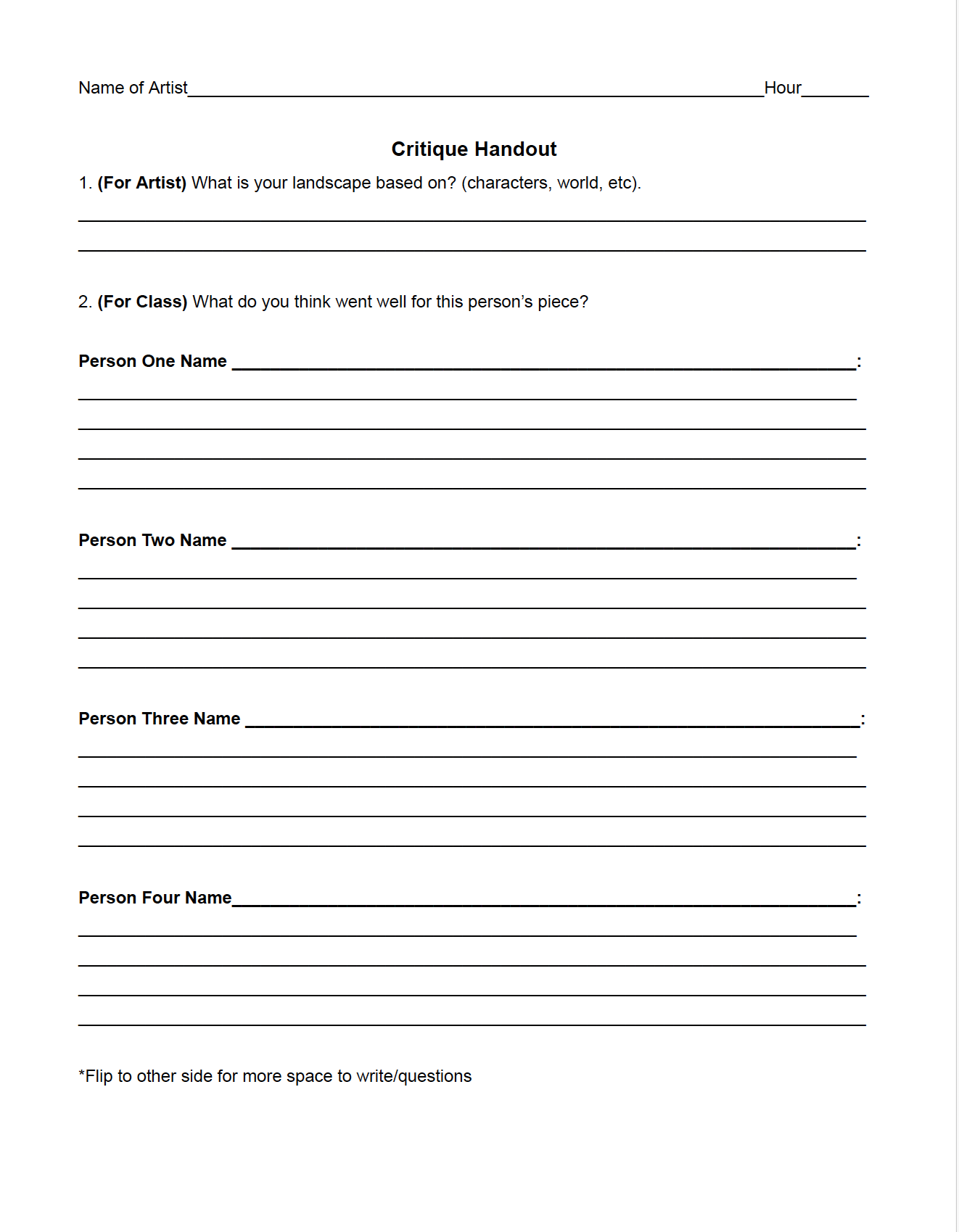
Critique Handout
A handout for students to fill out and give feedback to their peers. This can be done by having students move from table to table or in a set group. This form of critique can be used for a formative or summative assessment.
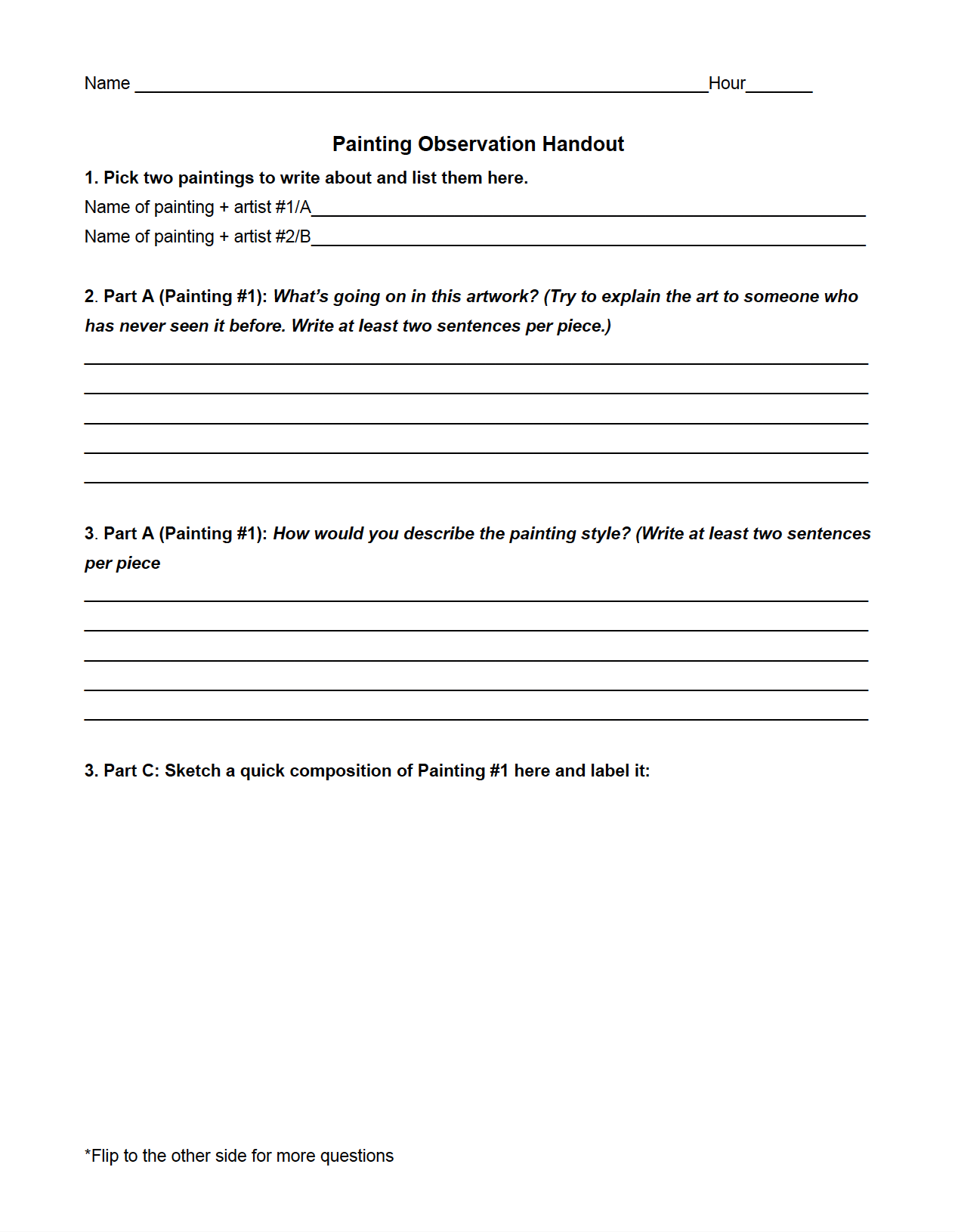
Painting Observation Handout
A handout for students to fill out while observing art to help them think about how they can apply what they see in the art made by professional artists to their own work. This is great for field trips to art museums and other art shows.
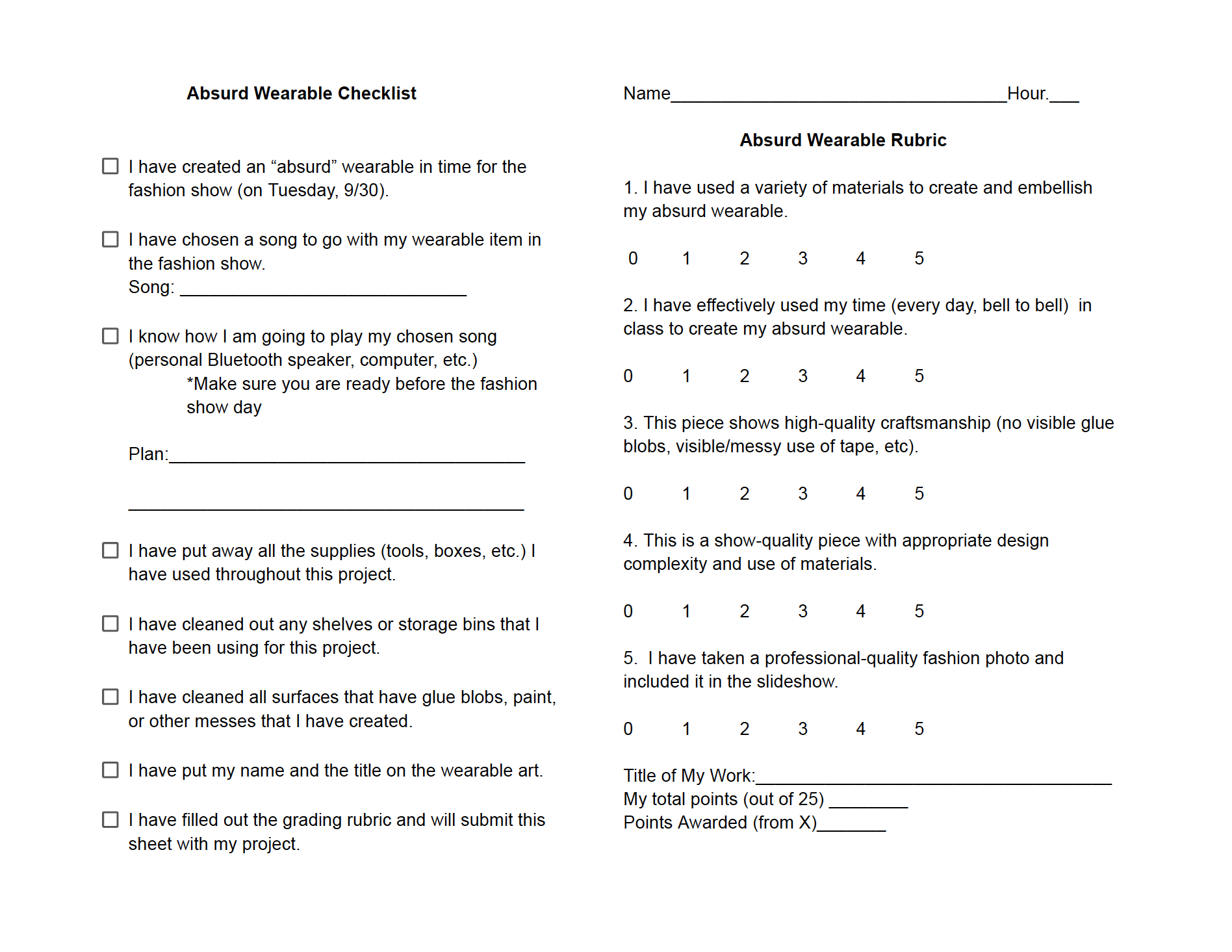
Grading Sheet Example.
The grading sheet/rubric is self-scored by students, so they have a chance to reflect and refine their work before giving it to the teacher. This is also a way for students to have a say on their final score.